Simple Challenge: A Display Font with Elegance and Versatility
Simple Challenge for Lifestyle Blog Headers and Editorial Design
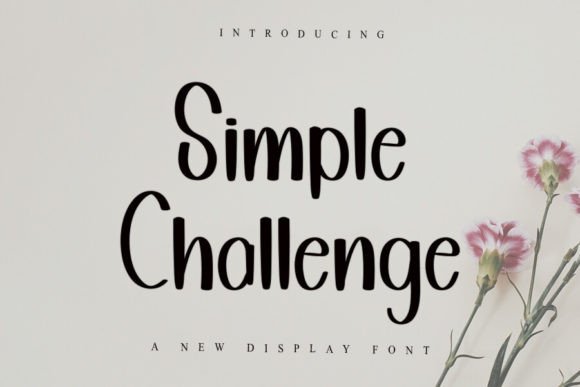
Simple Challenge is a display font that brings a sense of elegance and playfulness to any editorial layout. I recently used it while redesigning the header for a lifestyle blog, and the results were nothing short of inspiring. The font’s clean curves and subtle flourishes give it a modern yet timeless feel, making it perfect for headings that need to stand out without overwhelming the reader.
When I tested Simple Challenge on the blog’s new header, it immediately elevated the overall design. The font’s rhythm and visual character created a mood that felt both approachable and professional. It worked especially well when paired with a minimalist sans serif font for body text, ensuring readability didn’t suffer despite the expressive nature of the display font.
Simple Challenge for Recipe Ebook Titles and Content Branding
Another real-world use case came up when I was working on a recipe ebook. The title needed to be eye-catching but also reflect the warm, inviting tone of the content. Simple Challenge fit perfectly here. Its elegant strokes and soft edges gave the title a touch of sophistication, while still feeling friendly and accessible.
I found that Simple Challenge was particularly effective for chapter openers and pull quotes within the ebook. The font maintained a consistent visual identity throughout the document, which helped reinforce the brand’s personality. For longer sections, I paired it with a more readable serif font, ensuring the balance between style and functionality remained intact.
What stood out was how well the font adapted to different sizes and formats. Whether it was on a digital screen or printed in a physical cookbook, Simple Challenge retained its clarity and charm. This makes it an excellent choice for content creators looking to build a strong publication identity through typography.
Simple Challenge for Wedding Guide Covers and Social Media Graphics
In another project, I used Simple Challenge for the cover of a wedding guide. The font’s playful yet refined aesthetic matched the theme of the publication beautifully. It allowed me to create a visual hierarchy that guided the reader’s eye from the main title down to the subtitle and supporting details.
The same font also performed well in social media graphics for the wedding guide. When used for Instagram posts or Pinterest pins, Simple Challenge added a touch of elegance that aligned with the brand’s image. It was easy to read even at smaller sizes, which is crucial for mobile users scrolling through feeds.
For these kinds of projects, I recommend using Simple Challenge sparingly—primarily for titles, headers, and decorative accents. While it’s not ideal for dense paragraphs or small captions, its strength lies in drawing attention and creating a memorable first impression.
Simple Challenge for Newsletter Graphics and Course PDFs
When designing a newsletter for a coaching business, I experimented with Simple Challenge as the primary font for headlines and callout boxes. The result was a cohesive look that felt both professional and engaging. The font’s versatility made it suitable for a variety of elements, from feature titles to section headers.
For course PDFs, I found that Simple Challenge worked best for titles and key points, while keeping the body text in a clean, legible sans serif. This approach helped maintain a clear distinction between decorative and functional typography, which is essential for long-form educational content.
One thing to consider is that Simple Challenge may not be the best choice for all types of content. If you’re working on a formal report or a publication that requires high levels of readability across large blocks of text, it might be better to use it only for decorative purposes rather than for extended reading.
As with any display font, it’s important to check what styles, alternates, ligatures, weights, and file formats are included. Ensuring that the font has proper commercial licensing is also crucial if you plan to use it in paid publications, templates, or client work.